A listing tagged Imperial Sands can sit in Imperial Beach, or just over the city line in San Diego. The ZIP code, the park name, and the photos will not settle that. Pin the parcel, the park’s legal name, and the land deal before you talk money.
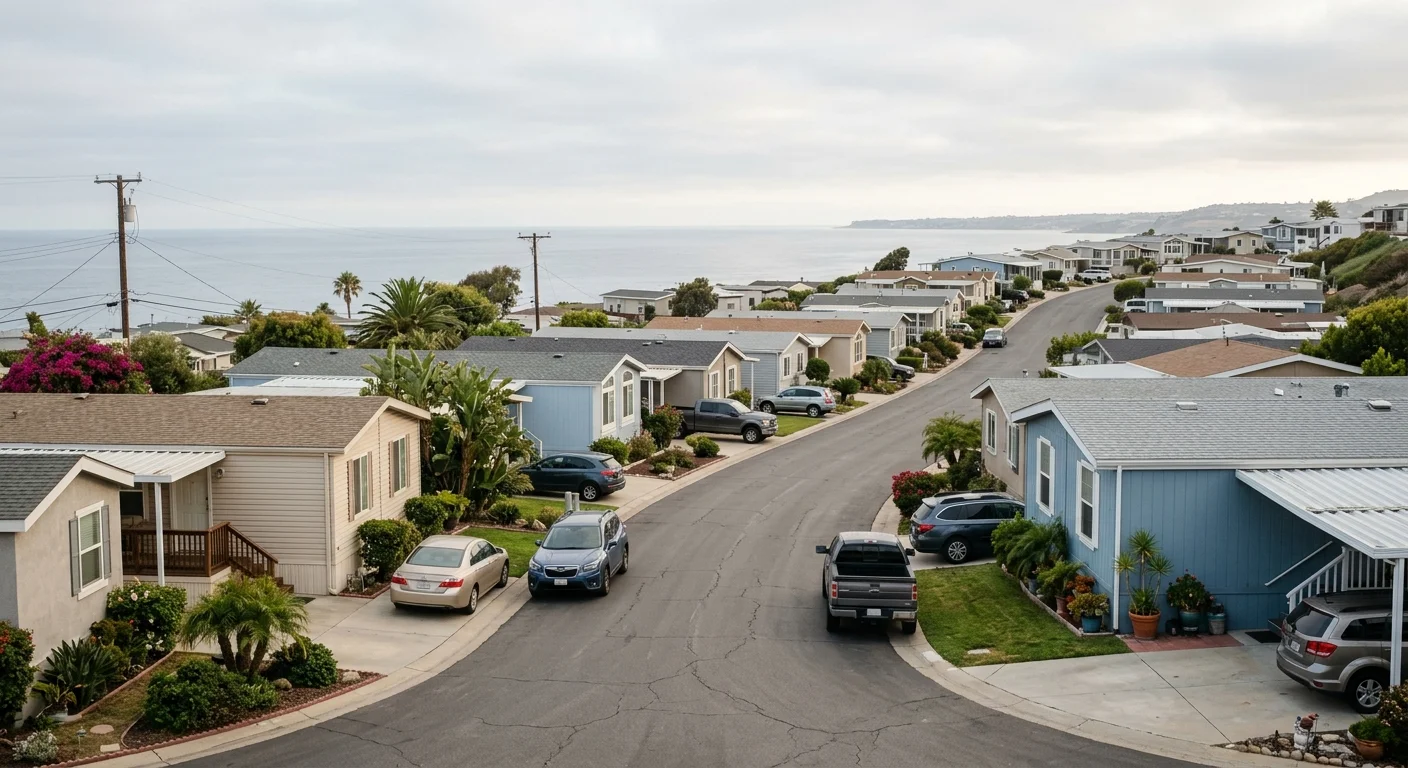
Land & Home SD does not operate this park, sell homes in it, or approve applications. We are a referral service. We match San Diego County buyers with licensed, independent manufactured-home dealers and installers. You contract with those pros directly. Use this page as a verification guide for one named community, then read our citywide Imperial Beach mobile home buyer checks if you are still comparing South Bay parks.
Verify whether the address is inside Imperial Beach
Imperial Beach is the county’s southwest corner. It sits against the Silver Strand, the Tijuana River estuary, and the border. Palm Avenue (State Route 75) is the east-west spine from Seacoast Drive toward I-5. That corridor is where Imperial Beach, Palm City, Nestor, and Otay Mesa West start to blur on a map.
The 92154 ZIP covers the City of Imperial Beach and large pieces of the City of San Diego. A listing that says “San Diego, CA 92154” or “minutes from Imperial Beach” may be outside Imperial Beach city limits. Third-party pages for Imperial Sands mobile home park have used more than one street name and more than one city label. Treat every published address as a lead, not a fact.
Ask park management for the full site address and the assessor parcel number for the space you want. Then look the parcel up on the county’s public property records. Confirm which city the parcel sits in. If the parcel is in Imperial Beach, the City of Imperial Beach is the local building department. If it is in the City of San Diego, city Development Services handles local permits. San Diego County Planning & Development Services covers unincorporated land. County private-lot rules, including County PDS 103, do not automatically apply inside either city.
That city line changes daily life. Imperial Beach is a low, coastal grid with marine layer, salt air, and estuary weather. Palm City and Otay Mesa West sit farther from the beach and closer to I-5, I-805, and Otay Mesa freight traffic. Naval Outlying Landing Field Imperial Beach puts aircraft noise on the west side of this metro. Chula Vista is the next city east. San Ysidro sits south and east toward the port of entry. None of that tells you the park is a fit. It does tell you why two homes with the same ZIP can live in different cities, different permit shops, and different school and tax settings.
If the listing only gives a space number, stop. Get the street, the city, and the parcel in writing. Then walk the block yourself. Confirm you are not mixing this park with another Imperial Beach mobile home park a few streets away.
Confirm the park’s current identity and status
Search results for Imperial Sands mobile homes do not agree with each other. Some pages attach an LLC name. Some use a shortened “mobile park” label. Some tack a space number onto the community name. Spelling variants show up too. None of that is a substitute for the name on the residency documents you would sign.
Ask management for the legal name of the park, the name of the operating entity, and the physical office address. Ask whether the community is still operating as a mobilehome park under California’s Mobilehome Residency Law. California Civil Code Chapter 2.5 (sections 798 through 799.13) is that law. It was added in 1978. It applies to mobilehome park residency, not to a manufactured home on private land you own. We could not verify, from the sources we are allowed to cite, this park’s current owner, license status, lot count, age rule, pet rule, or amenity list. Those items have to come from management and from the written park documents.
Do not infer “all ages” or “55+” from a listing headline. Age targeting is a park rule. It can change. Ask for the current rule in writing, and ask how they apply it to buyers, occupants, and guests. Same for occupancy limits, subletting, and home-age or condition standards for incoming coaches.
Operating status is a separate check. A park can still have homes for sale while it is in a sale, a conversion, or a change of management. Ask whether a change of use, a buyout, or a conversion has been noticed to residents. If they will not answer in writing, do not guess. The California Department of Housing and Community Development manufactured and mobilehome pages are the state starting point for how this housing type is regulated. HCD is also the occupational licensing authority for manufactured-home dealers and salespeople. Confirm any dealer you work with through HCD occupational licensing, not through a listing logo.
Land & Home SD does not represent the park and does not keep its roster. If you want help finding manufactured homes for sale that actually match this community’s current rules, we can connect you with a licensed local dealer. The dealer still has to clear the park. So do you.
Determine whether land ownership is included
Most park purchases in San Diego County are the home only. You buy the coach. You rent the space. The land stays with the park owner. That is a different deal from a manufactured home on a private lot in Imperial Beach, Nestor, or Otay.
Ask this in one sentence: “Does this price include the land under the home?” Then get the answer on paper. If the land is not included, you are looking at space rent, park rules, and a lease or month-to-month residency. Our guide to mobile home space rent in San Diego covers the cost categories to line up. We could not confirm a current space-rent figure, a utility bundle, or a rent-increase history for Imperial Sands from the verified ledger we write from. Listing ranges are not a source. Call the park office for the charge that applies to the specific space.
If a seller claims the land is included, treat that as a title problem until the records agree. You want the deed or other recorded land interest, the HCD title on the home, and a clear statement of how the two are tied. Under California Health and Safety Code section 18007, a manufactured home is a post-June 15, 1976 unit on a permanent chassis, built to the federal HUD Code. A mobilehome under section 18008 is the pre-June 15, 1976 counterpart. Those labels describe the structure. They do not, by themselves, mean you own the dirt.
A home installed on a foundation system is a further fork. HCD’s current registration and titling guidance says a manufactured or multifamily manufactured home installed on a foundation system is no longer registered by HCD. The owner follows HCD’s consumer process to cancel registration and confirm the individual property record was completed. That still does not prove a lender will treat the home as real estate, and it does not prove this park allows a foundation. Park pads are often personal-property setups. Confirm with management, then confirm with HCD registration and titling.
HUD Title I can finance a manufactured home, a lot, or both. HUD states the home may be classified as personal property or as real estate. Borrowers may lease the lot, including a site in a manufactured-home community or mobile home park. HUD’s published lease baseline for that path is an initial term of three years, with at least 180 days’ advance written notice if the lease will be terminated. That is HUD’s program language, not an approval, a rate, or a promise that this park’s lease meets it. Ask the park for the actual lease term they will give a buyer. Ask any lender whether they will place a lien in this community. If either answer is no, the financing path changes before you offer.
Resident-owned parks exist in the county. We could not verify that Imperial Sands is one. If someone tells you it is a cooperative or a resident-owned community, ask for the membership documents and how a buyer is admitted. Do not take a Facebook comment as the ownership structure.
Review written park, title, and financing records
Verbal tours sell the location. Paperwork sells, or kills, the deal. Collect a packet before you write a number.
From the park, ask for the current rules and regulations, the current space-rent statement for that space, the utility billing method, any extra fees, the application packet, and the form of tenancy they use. California’s Mobilehome Residency Law exists. The specific tenant protections in the later sections of that chapter were not verified in our primary-source ledger, so do not take a blog summary as the rule. Read the park’s documents. If a term is missing, ask management to point to the clause.
From the seller, ask for the HCD title (or the recorded real-property status if registration was cancelled), the registration card on a used unit, and a payoff statement if there is a lien. For a used manufactured home, California Health and Safety Code section 18035 puts the current registration card, junior-lienholder copies, and the certificate of title into escrow. Legal owners and junior lienholders must release the security interest on payment, or approve a formal assumption. If the used home is subject to local property tax, escrow may request a tax clearance or conditional tax clearance from the county tax collector. We could not verify San Diego County’s current assessor procedure from a public page we are allowed to cite. Ask escrow and the tax collector for the certificate that applies to this home.
Confirm the unit’s build date against the June 15, 1976 line. Post-1976 manufactured homes must comply with the National Manufactured Housing Construction and Safety Standards Act, per California Health and Safety Code section 18025. Pre-1976 mobilehomes are not HUD Code homes. That affects lenders, insurers, and some park entry rules. It does not, by itself, tell you the home is safe. Pay for an independent inspection of the coach, the hitch and running gear if they remain, the underfloor, and the utility connections.
Financing is its own file. Park-only homes are often personal-property (chattel) loans. Lot-and-home packages can be real-property loans if title and foundation status support that. HUD Title I is one federal path, with the lease conditions noted above. Do not promise yourself a mortgage because a listing says “owner will carry” or “easy qualifying.” Have the lender put in writing whether they will lend on this park, this year of home, and this title status.
Keep dealer paperwork in the same folder. The person selling the home may be an HCD-licensed dealer or salesperson, a private owner, or a park-related seller. HCD can cite a person acting as a dealer without a license, with penalties up to $2,000 under Health and Safety Code section 18024. Look the license up. Land & Home SD is not a dealer and does not hold that license.
Walk this in the same order as the rest of a South Bay purchase: park first, title second, money third. Our buying and placement process page is the sequence we use when we connect you with a licensed dealer or installer. The park still has to accept you. The title still has to transfer. No referral changes that.
Confirm current terms before applying or offering
Everything above can be true on Tuesday and stale on Friday. Parks change rent, rules, and application screens without updating listing sites. Confirm the live terms for the space you want, in writing, in the week you apply.
Ask management to restate space rent, what it includes, what it does not include, and any pass-throughs. Trash, water, sewer, and gas are often billed differently from home to home. We could not confirm a bundle for this park. Ask. Ask about deposits, credit checks, income screens, and how long an approval letter lasts. Ask whether the home on that space already failed a park inspection, and whether you would have to repair or replace it as a condition of staying.
If you are replacing the coach later, say so now. Parks set standards for incoming homes: width, age, roof, siding, skirting, and setback. We could not verify Imperial Sands’ current replacement standard. Get it before you shop a new unit. A home that fits a private lot in East County can fail a South Bay park pad.
Do not skip the local weather in that last pass. This is not El Cajon. Coastal South Bay sits in marine layer. Metal, wood, and underfloor insulation take salt and damp. Ask the inspector to look at that, not at a desert punch list copied from inland listings.
When the packet is current, then decide whether to apply, offer, or walk. An offer written against last year’s rent sheet is not a real offer. An application filed before you know the city, the land deal, and the title is just a fee. Slow is cheaper than a bad close.
When to call us
Call before you treat a third-party Imperial Sands listing as the park, the city, or the price. If the address, the land deal, or the title is still fuzzy, pause the offer and sort the file first. Call us at (858) 400-4608 and we’ll walk through your options and connect you with a licensed local dealer.