A listing tagged Chula Vista can sit on the bay, on the Otay mesas, or outside the city line. Buyers lose time when they tour a park they cannot occupy, finance, or carry on the real monthly bill. Run these checks on every Chula Vista mobile home park before you lock a space number.
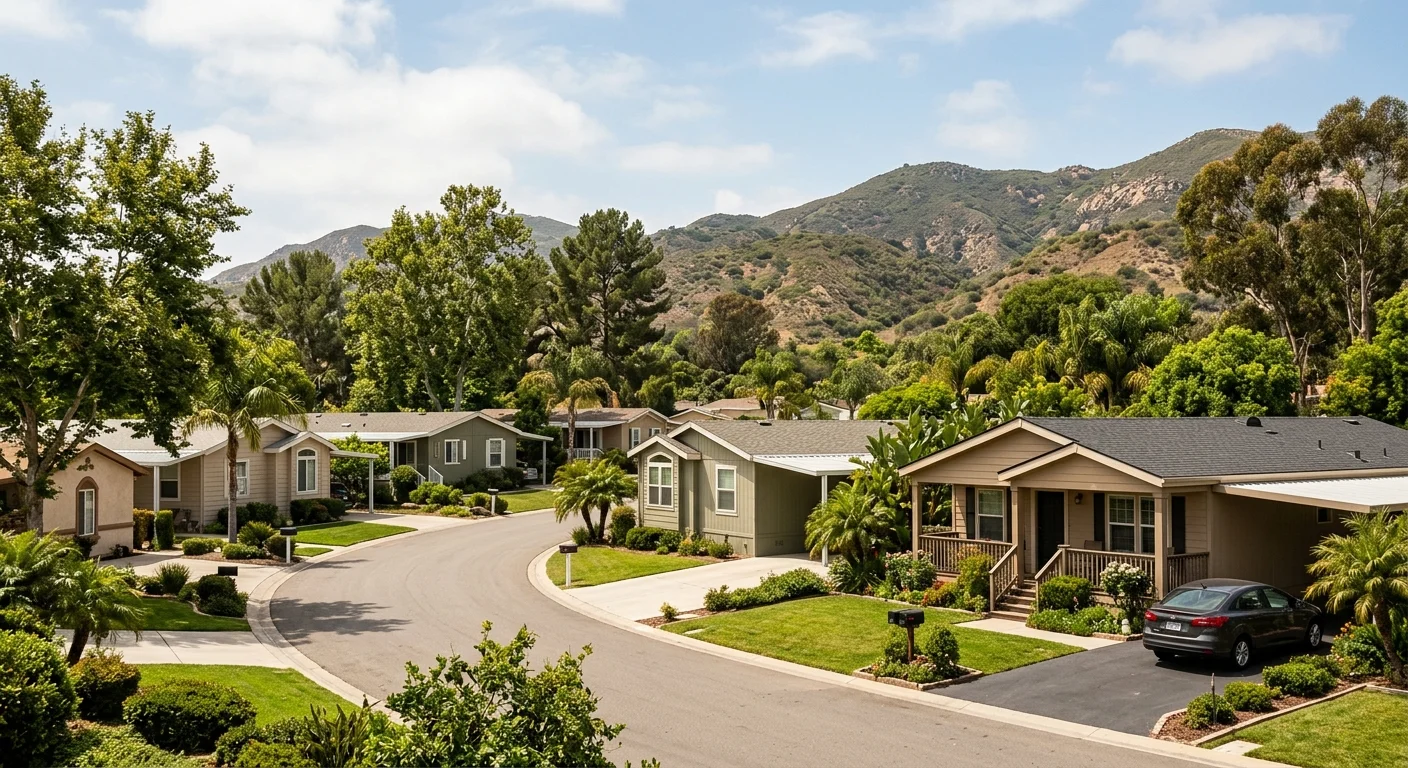
Separate Chula Vista from nearby South Bay results
Chula Vista covers a wide South Bay footprint. The west side sits along San Diego Bay, the Blue Line trolley, and I-5. Inland neighborhoods climb toward Otay Lakes, Eastlake, and Otay Ranch, with I-805 and State Route 54 carrying most of that traffic. Marine layer and bay breeze shape the shoreline. Summer heat sits longer on the inland mesas. Those two climates change how a home ages, how you cool it, and what you want from a carport or a covered patio.
Search pages treat “Chula Vista” as one market. The map does not. National City, Imperial Beach, San Ysidro, Otay Mesa, and unincorporated pockets such as Bonita show up in the same results. A home can carry a Chula Vista-sounding community name and a San Diego or National City mailing city. Copy the full street address, including the space number, and place it on the City of Chula Vista’s public map. If the pin falls outside city limits, you are looking at a different agency for local rules.
That split matters for daily life as much as for paperwork. Bayfront and west-side parks sit closer to the trolley, Palomar-area shopping, and the shoreline parks near Sweetwater Marsh. Eastlake and Otay Ranch parks sit closer to newer retail, Otay Lakes Road, and inland schools. A commute to the border, downtown San Diego, or a shipyard job is a different drive from each of those pockets. Time the drive at the hour you would actually leave.
Listings also mix homes for sale with homes for rent. Some operators rent the structure. Many Chula Vista mobile home parks listings are a home you would buy on a leased space. Read the first screen of the listing until you know which deal it is. “Mobile home parks in Chula Vista” and “Chula Vista mobile home parks for sale” pull both kinds of ads, plus the rare listing of a park business itself.
San Diego County Planning & Development Services covers unincorporated land. Chula Vista is an incorporated city, so city staff handle parcels inside the line. County lot rules for manufactured homes on private land do not automatically apply to a city park space. Keep the jurisdiction straight before you compare two addresses.
Land & Home SD serves all of San Diego County as a referral service. We match you with licensed, independent dealers. We do not run parks, set residency rules, or sell homes from inventory.
Verify each park’s name, address, and current status
Marketing names change. Legal names on residency papers often stay put. Write down every version you see: the listing title, the gate sign, the office door, and the name printed on the space-rent statement. Ask the manager for the name that appears on the park’s residency documents. If those four strings disagree, pause until they match.
Match the address the same way. A Chula Vista mobile home park listing may lead with a community name and hide the street until you call. Get the street, the number, the space, and the ZIP. Drive it. Confirm the office is open to the public and that the park is still operating as a mobilehome community. Parks convert. A sold-out or closing community can still sit in old search results.
A current, complete roster of every operating park inside Chula Vista, with verified addresses, could not be confirmed from the sources this page is allowed to cite. Listing sites name communities across west-side industrial streets, older central blocks, and inland mesa roads. Treat those names as leads. Confirm each one with the park office and with the city.
Ask whether the space is in a park the city still recognizes as a mobilehome park. The California Department of Housing and Community Development publishes consumer pages for manufactured homes and mobilehomes. Use that site as the state starting point. Do not treat a brokerage photo as proof the community is open, all-age, or accepting new homes.
If a dealer or salesperson is in the deal, verify their HCD occupational license on HCD’s licensing page. Land & Home SD is a referral service. The dealer you contract with holds the license. We do not.
Keep a one-page file per park: legal name, street address, manager’s name, date you called, and whether they are accepting applications. That file is how you compare parks. A folder of listing screenshots is not.
Compare written age rules and park terms
Age rules decide whether you can live there. Some Chula Vista communities are written as 55-and-older. Others take all ages. A listing that says “senior” is still only a lead. Ask for the current occupancy rule in writing, including whose age counts and whether a younger spouse or caregiver can reside. Get the date on that page. Rules get restated. You want the version in force this month.
Read the rest of the residency package with the same care. Parks set rules on pets, extra vehicles, home width, siding, porches, and how old a home can be to enter the community. Those rules change the homes you can actually buy. An all-age park near older west-side streets can run a different incoming-home standard than an inland 55-and-older community. Compare the written standard to the home you want, including a replacement home later.
California’s Mobilehome Residency Law lives in Civil Code Chapter 2.5, starting at section 798. That chapter applies to mobilehome park residency. The full list of tenant protections is something to read in the current code and to walk through with counsel or a housing counselor. This page does not invent those details.
The park, not Land & Home SD, approves residents. We do not screen buyers for a community and we do not speak for management. If the manager will not send the rules before you write an offer, you do not have enough to compare that park with another.
Ask how a guest, a caregiver, or an adult child is treated under the current rule. Ask whether the park will accept the home as it sits, or whether it wants skirting, paint, or roof work before transfer. Get those answers on paper. Verbal tour talk disappears after you have paid for inspections.
Hold this park-selection work next to the later offer steps in our Chula Vista mobile homes offer checklist. Park rules first. Offer terms second. Mixing those two piles is how people fall in love with a kitchen and miss a residency clause.
Review title, financing, and inspection records
Under California law, a manufactured home is a factory-built dwelling constructed on or after June 15, 1976, on a permanent chassis, with the size and utility systems set out in Health and Safety Code section 18007. A mobilehome is the pre-June 15, 1976 sibling under section 18008. People still say “trailer park” in search. A travel trailer or RV park is a different product from a mobilehome park space with an HCD-titled home. Confirm you are buying a dwelling the park and the state treat as a mobilehome or manufactured home.
Title for most park homes runs through HCD, not DMV. On a used home, California Health and Safety Code section 18035 calls for the current registration card, junior-lienholder copies, and the certificate of title to go into escrow. When the home is on a local property-tax roll, escrow may request a tax clearance from the county tax collector. Follow the current consumer steps on HCD registration and titling. A listing that says “clear title” is still only a claim until escrow and HCD documents say the same thing.
Homes built on or after June 15, 1976 must meet the federal HUD Code in California. Pre-1976 mobilehomes sit outside that HUD construction standard. That date changes inspection focus and, often, lender appetite. HUD Title I can finance a manufactured home, a lot, or both. HUD states the home may be personal property or real estate, and that a borrower may lease the lot, including a site in a manufactured-home community or mobile home park, with a required initial lease term of three years and at least 180 days’ advance written notice if the lease will be terminated. That is HUD’s program rule. It is not a promise that a given Chula Vista park, dealer, or lender will accept you. Do not treat it as a rate, a term, or an approval.
Order a manufactured-home inspection before you waive anything. Look at the HUD label on a post-1976 home, the data plate if it is present, the underbelly, the roof, supply lines, and how the home sits on its supports. Park spaces in west Chula Vista near the bay face salt air. Inland mesa spaces face more heat. Neither fact replaces a written inspection.
Work the dealer path through our buying and placement process and browse manufactured homes for sale only after the park itself clears these title and finance questions. The home is the second half of the deal. The park is the first.
Confirm current charges with park management
Space rent is the number that turns a cheap home into an expensive month. Listing remarks go stale. A screenshot of last year’s rent is not a quote. Call the park office, give the space number, and ask for the current charges in writing: space rent, any separate utility bill, trash, sewer, and any pass-through the park currently collects. Ask what is included and what you will pay to the city or to SDG&E on your own.
A verified monthly rent figure for Chula Vista parks could not be confirmed from the sources this page is allowed to cite. Third-party range posts exist. They are not a bill. The park manager is the source for that space, this month. If they will not write it down, you cannot compare that park with another.
Walk the same questions across every finalist. Use our mobile home lot fees buyer checklist so the line items stay in the same order. Then add the home payment, insurance, and any park-required work. The right comparison is the full month, not the home’s asking price.
People also search how much to pay for a mobile home park. That question usually means the home-plus-space deal. Sometimes it means buying the park as a business. Those are different transactions. Land & Home SD does not sell parks and does not set space rent. If you mean the home, confirm the space bill with management and the home price with the seller or dealer. If you mean the park itself, you need a commercial real-estate path this buyer guide does not cover.
Ask whether a rent increase is already noticed, whether the space has unpaid charges that follow the home, and whether a buyer application fee is due. Get the application and the current space agreement before you spend money on a second inspection. Charges change. Paper dated the day you asked is the only figure that belongs in your comparison.
When to call us
Call before you tour a second park, and before you write a check for inspections on a space you cannot occupy or carry. If the city line, the age rule, the title path, or the written space bill is still fuzzy, that is the moment to talk. Call us at (858) 400-4608 and we’ll walk through your options and connect you with a licensed local dealer.