The report lands, and the purchase number you had in mind starts to move. Notes about the roof, the underbelly, or the panel are not yet a mobile home inspection repair budget. They become one only after a qualified inspector explains each item and a contractor puts a written scope on it.
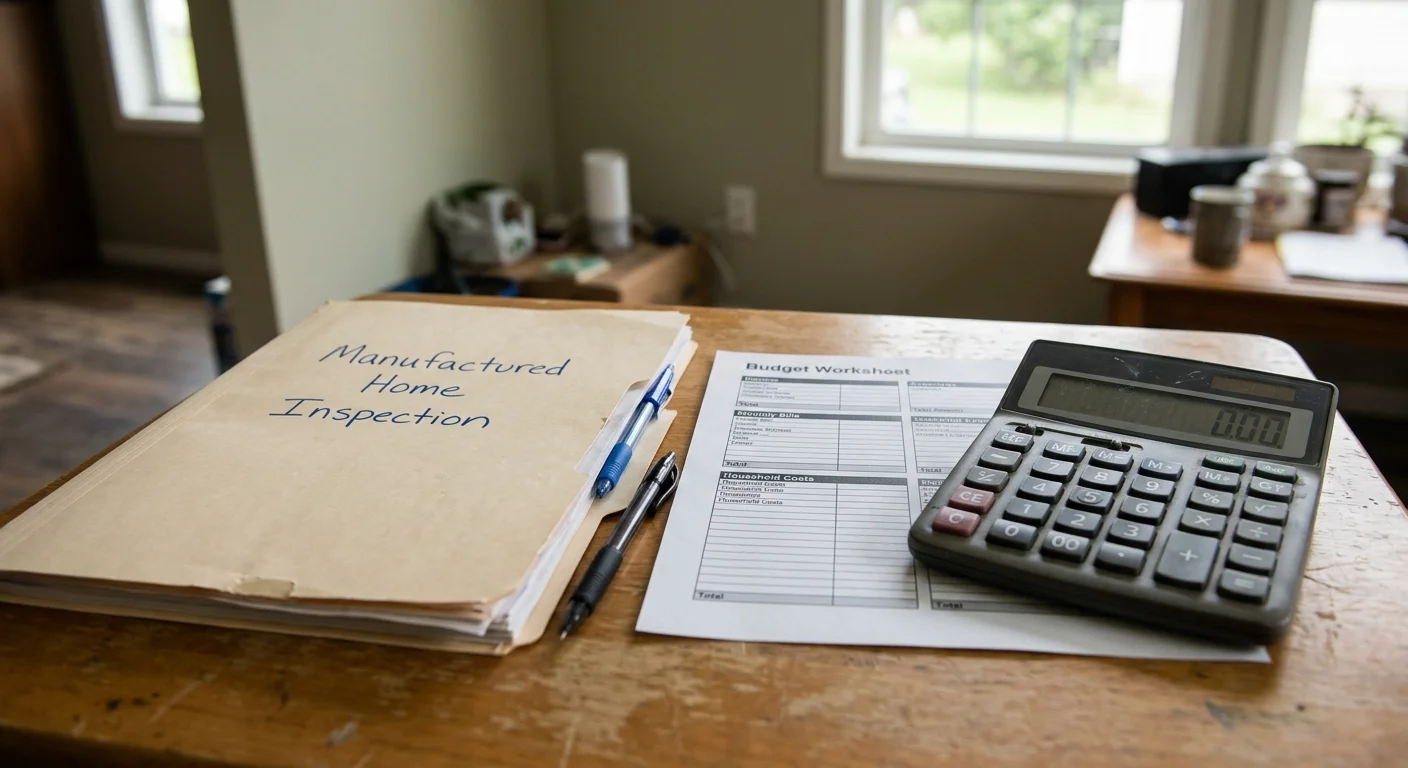
Separate urgent findings from optional changes
A mobile home inspection report is a list of observations, not a shopping list. The first budget move is to split what the inspector flagged into three piles. Items that need a specialist’s eyes before you close or move in. Items you can plan after you own the home. Items that are preference, not condition.
That split is local. A rust note on the chassis of a home in a Carlsbad or Oceanside park sits next to salt air and marine moisture. A similar note in El Cajon, Santee, or Lakeside is more likely about inland heat, drainage, and how the home sits on its piers. South Bay parks in Chula Vista and National City often hold older stock, including units built before California’s June 15, 1976 line between a mobilehome and a manufactured home. Age is not a defect. It does change which construction standard applied when the home left the factory.
Under California Health and Safety Code, a manufactured home is a post-June 15, 1976 home built to the federal HUD Code. A mobilehome is the pre-1976 structure. HUD construction standards do not apply to those older mobilehomes. If the report talks about labels, data plates, or original systems, ask the inspector to say which definition the home falls under. Do not treat that legal line as a repair price.
Urgent, in a budget sense, means the condition could affect whether you can occupy, insure, or close on the home as written. Optional means you could live with it and schedule work later. Cosmetic means it does not change how the home functions. You do not get to assign those labels yourself from a photo. The inspector’s language does. Your job is to refuse to dump every bullet into “must spend now.”
Park homes and private-land homes also sort differently. In a park, access under the home, skirting, and space rules can change how soon a finding can even be addressed. California’s Mobilehome Residency Law exists for park tenancy. It does not set your repair budget. On a private lot, especially in unincorporated county areas, San Diego County Planning & Development Services is the permit desk for a lot of site work. Incorporated cities run their own building departments. A finding that needs a permit is not a DIY line on your worksheet.
Keep the three piles on paper. If a line has no pile, it is not ready for money yet.
Ask qualified inspectors to define each concern
Do not let report shorthand become a dollar line. “Roof,” “electrical,” and “moisture” are categories. They are not scopes. Before you change the offer or add a repair column, ask the person who wrote the report to define each concern in plain words.
Ask what they saw, where they saw it, and how much of it they could actually reach. Ask what they could not see. Locked panels, stored belongings, tight crawl space, and sealed skirting all leave gaps. A gap is incomplete information. It is not a bid. Ask which items they want a specialist to confirm, and which items they are describing as wear. Then write those answers next to the finding. That is mobile home inspection cost planning in the useful sense: you are paying for a defined condition, not a vibe.
Land & Home SD does not inspect homes. Use a manufactured home inspection checklist for San Diego to prepare questions, then hire an inspector who regularly works manufactured and mobile homes in this county. Park setups, marriage lines on multi-section homes, and HUD labels are not the same walk-through as a tract house in Clairemont. Ask the inspector to put their scope in writing before the visit. The agreement, not a national blog, controls what they will open, test, and skip.
No San Diego County inspection fee is confirmed here. National round numbers from other markets do not travel. Size, number of sections, age, access under the home, travel across the county, and extra tests all change a quote. Ask two or three inspectors who do this housing type for a written fee on this address. Put that fee on the worksheet as its own line. Do not guess it.
There is no single “biggest red flag” that holds for every home. An inaccessible crawl, a missing data plate, or a system the inspector would not operate is a reason to ask more questions. It is not a reason to invent a repair number. Safety conclusions belong to the inspector and to any specialist they name. Your budget waits on that language.
Get written scopes from the right contractors
A finding is still not a repair. “Roof condition noted” is not a reroof. “Plumbing concern” is not a re-pipe. Until a contractor who does that system writes a scope, the line does not belong in the spend column.
Get the scope in writing. It should name the home, the location of the work, what will be opened or replaced, what is excluded, and whether permits are part of the job. Verbal ranges over the hood of a truck are easy to misremember. They also mix optional upgrades with the condition the inspector actually flagged. Ask for the work that answers the finding, then ask separately what the contractor would add if you wanted it. Keep those two numbers apart.
Match the trade to the item. A roofing note goes to a roofing contractor. An electrical note goes to an electrician. Chassis, support, and setup questions often sit with manufactured-home installers, not a general handyman. California’s Department of Housing and Community Development regulates manufactured and mobilehomes. Dealers and salespeople are licensed through HCD occupational licensing. Confirm the pro you call is licensed for the work you are asking them to price. Land & Home SD is a referral service. We do not bid repairs, pull permits, or send crews.
Site type changes the scope. In an Oceanside or Escondido park, the contractor may need park approval, tight access, and a plan for neighboring spaces. On private land in East County, the same finding can pull in setbacks, utility runs, and the local building department. Do not copy a scope from a different lot. Do not use a 16x80 reroof figure from another state. No reroof price is confirmed in our claims ledger. If a contractor will not write the work, the cost stays unconfirmed.
Two written scopes on the same finding are better than one. You are comparing the work described, not shopping a rumor.
Compare repair exposure with the purchase terms
Once you have defined findings and written scopes, set them next to the deal, not next to a fantasy of a perfect home. The purchase price is only one piece of manufactured home cost. Remaining work, park space rent or land costs, closing items, and title status all sit on the same worksheet. Our affordable mobile home budget checks walk through those other lines. Inspection repairs should not blow them off the page.
Sellers set transaction terms. You can ask the seller to complete named work, adjust the price, or leave the home as-is. None of those outcomes is promised. A lender or an insurer can also have conditions of their own. Those conditions are theirs to state. Do not assume a finding is “mandatory” in the legal sense because a national article said so. If financing is in play, ask the lender which items, if any, they need resolved before funding. Put that answer in writing too.
Title status belongs in this comparison. Used manufactured homes in California typically transfer through HCD registration and titling, not through a DMV casual sale. HCD’s registration and titling pages are where that process lives. A home on a foundation system is a different record than a home that is still registered as personal property. Repair work does not by itself settle that question. If the inspector or the escrow officer flags title, registration, or foundation paperwork, treat that as a deal term, not as a guess in the repair column.
Park versus land changes the math again. In a park, you may be buying the home and remaining a tenant on the space. On private land, you are tying the home to real property, and permitted site work can dwarf a small interior finding. Walk both paths through the buying and placement process before you treat a repair scope as the whole remaining cost.
If the written repair exposure plus the other confirmed lines no longer fits what you can pay, that is information. Walking is a budget decision, not a failure.
Keep unconfirmed costs out of the budget
Budgeting for mobile home repairs goes wrong when a maybe becomes a line item. If the inspector did not define the concern, it is not a cost. If a contractor did not write a scope, it is not a cost. Park it in a labeled “unconfirmed” column, or leave it off the sheet.
That rule kills the numbers people paste from other cities. Inspection averages from Chicago, Alabama, or a national mortgage blog are not San Diego County quotes. Annual “percent of home value” maintenance rules are not in our verified claims. Common-repair lists are marketing, not evidence. The most common repair on this home is whatever the inspector and the contractor document on this home.
Keep the inspection fee itself honest. It is a known quote from the inspector you hire. Specialty tests they recommend (if they recommend any) are separate quotes. Do not pre-load mold, sewer, or engineering dollars because a checklist on another site mentioned them. Add those lines only after someone who saw the home asked for that test and priced it.
Do the same with upgrades. New flooring, a different HVAC unit, or a prettier skirting color can wait in a wish list. Mixing them with condition work inflates the repair budget and muddies the offer. After you own the home, you can still plan that work. During the purchase, only confirmed scopes should move the number.
Revisit the three piles when new writing arrives. A specialist can turn an urgent unknown into a small defined job, or into a reason to stop. Either result is better than a round number you made up in the car after the walkthrough. The budget that closes a San Diego County manufactured or mobile home is the one built from paper: the report, the inspector’s clarifications, the contractor scopes, and the purchase terms. Everything else is noise.
When to call us
Call before you treat an inspection report as a final price, and before you sign around findings nobody has scoped. Land & Home SD does not inspect, repair, price, or sell homes. We help you sort the decision and connect you with licensed independent dealers. Call us at (858) 400-4608 and we’ll walk through your options and connect you with a licensed local dealer.